
High Solar Potential
~2000 kWh/m²/year irradiance
Hambantota region offers exceptional solar energy generation potential, ensuring optimal project economics and maximum ROI.
PPP Partnership
30-year lease security
AASL committed to public-private partnership model with long-term land lease and comprehensive support framework.
Executive Summary
Project Scope
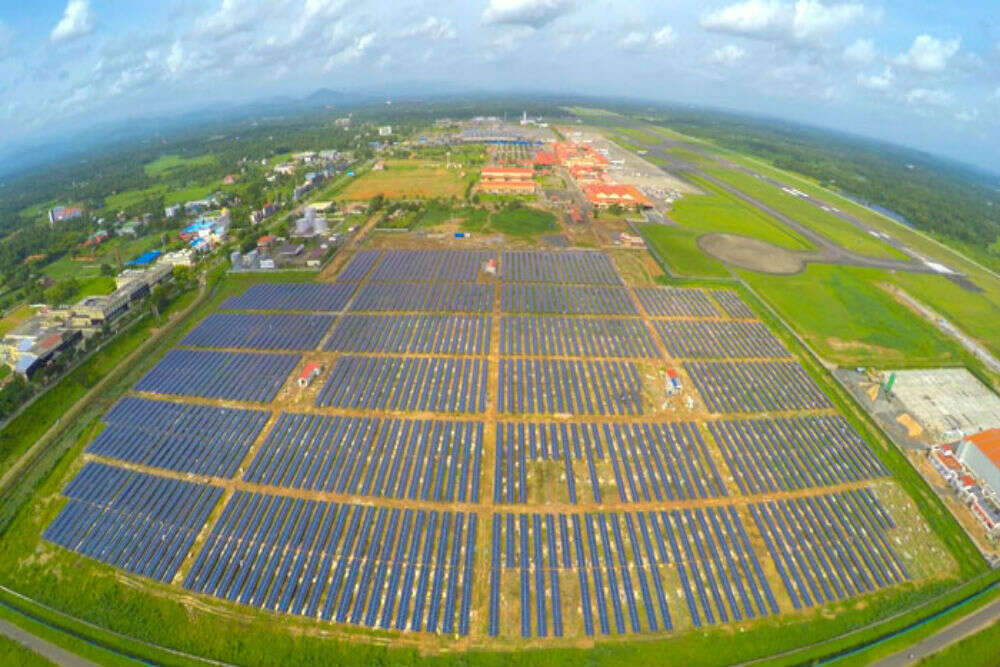
15 MWp ground-mounted solar PV system with expansion potential up to 102 MWp at MRIA, Hambantota
Strategic Alignment
Supports Sri Lanka's renewable energy goals and MRIA's vision as South Asia's green airport hub
Investment Appeal
Attractive long-term opportunity with stable revenue, ESG benefits, and scalable growth potential
This research proposal outlines a comprehensive ground-mounted solar photovoltaic (PV) power project at Mattala Rajapaksa International Airport (MRIA), Sri Lanka. The project represents a sustainable investment opportunity in green aviation infrastructure, with an initial capacity of 15 MWp and potential expansion to 102 MWp.
MRIA offers distinct advantages including extensive land availability, high solar irradiance (~2000 kWh/m²/year), and existing electrical infrastructure. Airport and Aviation Services (Sri Lanka) Limited (AASL) demonstrates full commitment to realizing this project through a public-private partnership model, providing long-term land lease and comprehensive support.
The project is strategically significant, aligning with national energy policies, supporting UN Sustainable Development Goals (SDG 7, 9, 13), and positioning MRIA as a leader in sustainable aviation practices while offering investors competitive returns and strong ESG credentials.
Background and Context
MRIA: Strategic Location and Vision
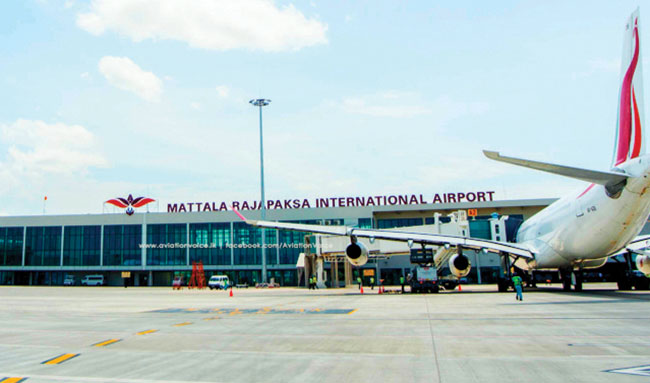
Mattala Rajapaksa International Airport, located in Hambantota, Southern Sri Lanka, occupies a strategic position as a potential aviation hub in South Asia. Its geographical proximity to major shipping routes and emerging economic centers enhances its significance.
AASL envisions transforming MRIA into South Asia's foremost green airport hub, integrating sustainable practices across all operations. This solar PV project serves as a cornerstone of that vision, aiming to significantly increase renewable energy share in the airport's power mix.
The development will elevate MRIA's profile as a leader in sustainable aviation, attracting environmentally conscious airlines and partners while enhancing long-term competitiveness.
Policy Alignment
- National Energy Policy Compliance
- SDG 7: Affordable and Clean Energy
- SDG 9: Industry, Innovation and Infrastructure
- SDG 13: Climate Action
Land Availability and Solar Potential
| Feature | Initial Phase (15 MWp) | Potential Expansion (Up to 102 MWp) | Notes |
|---|---|---|---|
| Land Area Required | Approx. 30 acres | Approx. 200 acres | Dependent on technology and layout |
| Land Availability at MRIA | Confirmed | Under Assessment | AASL has identified suitable zones |
| Average Solar Irradiance | ~2000 kWh/m²/year | ~2000 kWh/m²/year | Hambantota region has high solar potential |
| Estimated Annual Yield | ~24,000 MWh | ~163,200 MWh | Based on performance ratio of ~80% |
Table 1: Land Availability and Solar Potential at MRIA
Project Objectives
Energy Demand Fulfillment
- Meet 70-100% of MRIA's daytime energy demand
- Reduce reliance on national grid and diesel generators
- Provide long-term energy cost predictability
- Achieve significant operational cost savings
Environmental Sustainability
- Reduce CO₂ emissions by 7,000-8,000 MT annually
- Contribute to Sri Lanka's NDCs under Paris Agreement
- Demonstrate commitment to green aviation
- Set benchmark for regional airports
Investment Attraction
- Position MRIA as green investment destination
- Enhance profile as sustainable airport leader
- Attract environmentally conscious partners
- Foster cluster of green businesses
Technical Overview
System Specifications
The project involves design, engineering, procurement, construction, and commissioning of a ground-mounted solar PV power plant with initial capacity of 15 MWp. This capacity is selected to match significant portion of MRIA's daytime energy consumption.
Critically, the project is designed with scalability in mind, with potential future expansion capability of up to 102 MWp. This phased approach allows for learning from initial deployment and adapting to future technological advancements.
The system will utilize high-efficiency solar PV modules and state-of-the-art inverters to maximize energy yield and ensure reliable long-term performance, adhering to international standards for utility-scale solar PV plants.
Design Considerations
Fixed-Tilt vs. Tracking Systems
Evaluation of optimal configuration considering:
- • Capital and operational costs
- • Land availability constraints
- • Energy yield optimization
- • Maintenance requirements
Battery Energy Storage (Optional)
Assessment of BESS integration benefits:
- • Enhanced energy security
- • Grid stability support
- • Peak demand management
- • Increased solar power value
Energy Production Estimates
| System Capacity (MWp) | Estimated Annual Energy Production (MWh) | Estimated Annual CO₂ Savings (Metric Tons) |
|---|---|---|
| 15 | ~24,000 | ~7,000 – 8,000 |
| 50 | ~80,000 | ~23,000 – 26,000 |
| 102 | ~163,200 | ~47,000 – 53,000 |
Table 2: Estimated Energy Production and CO₂ Savings
Grid Connection and Site Suitability
Grid Integration
- Grid-tied connection via existing airport substation
- Compliance with CEB and PUCSL standards
- Minimal new infrastructure requirements
- Efficient power distribution within airport
Solar Resource
~2000 kWh/m²/year
Average Global Horizontal Irradiance
Hambantota district offers exceptional solar resource quality
Financial Framework
Public-Private Partnership Model
The MRIA solar PV project will be developed under a Public-Private Partnership (PPP) framework, leveraging strengths of both public and private sectors for optimal project delivery and risk management.
AASL (Public Partner)
- • Land provision on long-term lease
- • Facilitation of approvals and permits
- • Grid connectivity support
- • Power off-take commitment
Investor/Developer (Private Partner)
- • Project financing and investment
- • Design, engineering, and construction
- • Operation and maintenance
- • Technology and innovation expertise
Revenue Streams & Incentives
Primary Revenue: Power Purchase Agreement
Long-term PPA (20-25 years) with AASL at agreed tariff provides stable, predictable cash flow
Government Incentives
- • Feed-in tariffs for renewable energy
- • Tax concessions and duty waivers
- • Streamlined approval processes
- • Policy support for green energy
Additional Revenue Potential
- • Carbon credit generation
- • Grid services and ancillary revenue
- • Energy storage value optimization
Financial Projections
Comprehensive Financial Modeling
Detailed financial analysis will include Net Present Value (NPV), Internal Rate of Return (IRR), and Payback Period calculations, supported by sensitivity analysis for key variables:
- • Solar resource variability assessment
- • Capital cost fluctuations
- • PPA tariff structure optimization
- • Operational expenditure projections
- • Financing terms and conditions
- • Currency exchange rate impacts
Environmental and Social Impact
Positive Environmental Contributions
CO₂ Emission Reductions
Estimated annual CO₂ savings from 15 MWp system through fossil fuel displacement
Renewable Energy Generation
Clean electricity production from initial phase, contributing to national energy security
Climate Change Mitigation
Direct contribution to Sri Lanka's Nationally Determined Contributions under Paris Agreement and global climate action goals
Socio-Economic Benefits
Job Creation
Significant direct and indirect employment generation throughout project lifecycle
Local Economic Stimulus
- Procurement of local goods and services
- Enhanced regional reputation for green technology
- Potential for attracting further sustainable investments
- Improved livelihoods in Hambantota region
Addressing Historical Environmental Challenges
Ecological Context
MRIA development previously impacted approximately 2,000 hectares of forested area that served as habitat for an estimated 100-150 wild elephants [49], leading to increased human-elephant conflict.
The solar PV project will implement comprehensive mitigation measures based on lessons learned from prior environmental assessments.
Mitigation Strategies
- • Detailed site-specific Environmental Impact Assessment
- • Careful solar farm location selection to avoid critical habitats
- • Vegetative buffers and wildlife passage maintenance
- • Advanced monitoring technologies (camera traps, sensors)
- • Integration of habitat enhancement measures
- • Comprehensive Environmental Management Plan
Innovative Approaches
- • Protein profiling and biomarker analysis for wildlife monitoring [153]
- • Avian surveys to understand bird species and flight patterns
- • Strategic panel placement to minimize wildlife impacts
- • "Ecovoltaics" concept integrating energy production with ecological benefits
- • Collaboration with Department of Wildlife Conservation
Enhanced ESG Performance
For AASL/MRIA
- Demonstrated commitment to sustainable aviation
- Improved reputation among passengers and airlines
- Alignment with global best practices
- Enhanced regulatory compliance
For Investors
- Strong ESG credentials for capital attraction
- Improved risk management profile
- Positive corporate image enhancement
- Competitive advantage in sustainable investing
Stakeholder Ecosystem
Key Project Stakeholders
AASL
Airport and Aviation Services (Sri Lanka) Limited
- • Project proponent and landowner
- • Primary power off-taker
- • Facilitation of project implementation
CEB
Ceylon Electricity Board
- • Grid interconnection approval
- • Power purchase agreements
- • Grid code compliance
SLSEA
Sri Lanka Sustainable Energy Authority
- • Renewable energy policy guidance
- • Project approvals and incentives
- • Technical standards compliance
Regulatory Bodies
- • PUCSL - Tariff approvals
- • CEA - Environmental clearances
- • DWC - Wildlife conservation
- • CAASL - Aviation safety
EPC Contractors
Engineering, Procurement, Construction
- • Technical expertise provision
- • Project management execution
- • Supply chain management
Investors
Financial Institutions & Developers
- • Project financing provision
- • Risk management expertise
- • Long-term asset management
Required Government Support
Policy Support
- • Clear and stable renewable energy regulations
- • Attractive incentive frameworks
- • Streamlined approval processes
Fast-Track Approvals
- • Expedited environmental clearances
- • Timely grid connection approvals
- • Efficient land lease processing
Financial Incentives
- • Duty waivers for imported equipment
- • Tax concessions for renewable projects
- • Feed-in tariff guarantees
Collaboration Framework
Stakeholder Collaboration Flow
Risk Mitigation Plan
Risk Identification
Regulatory Risks
- • Delays in permits and approvals
- • Changes in government policies
- • Tariff setting uncertainties
- • Grid access regulation changes
Technical Risks
- • Equipment underperformance
- • Design and construction flaws
- • Grid interconnection challenges
- • Operational maintenance issues
Additional Risk Categories
Climatic Risks
- • Solar irradiance variability
- • Extreme weather events (cyclones)
- • Monsoonal rain impacts
- • Long-term climate change effects
Cost-Related Risks
- • Solar panel price fluctuations
- • Currency exchange rate volatility
- • Construction cost overruns
- • Operational cost increases
Proposed Mitigation Strategies
Proactive Risk Management
Regulatory Risk Mitigation
- • Early and continuous agency engagement
- • Thorough application documentation
- • Legal and expert advisory support
- • Alternative regulatory pathway planning
Technical Risk Mitigation
- • Reputable EPC contractor selection
- • High-quality certified equipment usage
- • Rigorous design reviews and QA/QC
- • Comprehensive O&M contracts with guarantees
Operational Safeguards
Climatic Risk Mitigation
- • Weather-resistant design standards
- • Regular maintenance and cleaning schedules
- • Natural disaster insurance coverage
- • Climate adaptation planning
Cost Risk Mitigation
- • Long-term supply agreements
- • Local sourcing optimization
- • Financial planning with contingencies
- • Currency hedging mechanisms
Contingency Planning Framework
Risk Register
Comprehensive risk tracking with regular updates and clear responsibility assignments
Monitoring System
Continuous risk assessment with early warning indicators and trend analysis
Adaptive Response
Flexible mitigation implementation with regular strategy adjustments
Timeline and Milestones
Project Phases and Duration
| Phase | Key Activities | Estimated Duration |
|---|---|---|
| 1. Feasibility & Development | Detailed site assessment, solar resource analysis, EIA, financial modeling, PPP structuring, securing initial approvals | 3-6 Months |
| 2. Procurement & Financing | EPC contractor selection, finalizing financing agreements, securing all permits | 3-4 Months |
| 3. Construction | Site preparation, civil works, mounting structure installation, panel and inverter installation, electrical works, grid connection | 6-9 Months |
| 4. Commissioning & Handover | System testing, performance verification, grid synchronization, operational readiness, handover to O&M team | 1-2 Months |
Total project duration: 13-21 months from feasibility commencement to commissioning
Key Deliverables
Feasibility Phase
- • Detailed feasibility study report
- • Environmental Impact Assessment
- • Preliminary design documentation
- • Financial model and PPP agreement
Procurement Phase
- • Signed EPC contract
- • O&M agreement execution
- • Project financing closure
- • All necessary permits and approvals
Construction Phase
- • Completed solar PV plant
- • Civil, mechanical, electrical works
- • Pre-commissioning test reports
- • Completion certificate
Commissioning Phase
- • Commissioning test reports
- • Performance acceptance certificates
- • Operational handover documentation
- • Commercial Operation Date declaration
Project Timeline Visualization
Critical Success Factors
- • Timely regulatory approvals and permits
- • Effective stakeholder coordination
- • Quality assurance throughout implementation
- • Proactive risk management
Strategic Benefits
Investor Benefits
Secure Asset Base
Long-term land lease from AASL provides stability and minimizes land-related uncertainties
High Energy Yield
High solar irradiance at MRIA site translates to superior energy yields and project economics
ESG Credentials
Enhanced environmental credentials appealing to socially responsible investors and lenders
Market Entry
Entry into Sri Lanka's renewable energy sector and specialized airport-linked infrastructure market
AASL Benefits
Cost Savings
Significant cost savings through predictable solar power pricing compared to conventional sources
Sustainability Leadership
Drastically reduced carbon footprint and enhanced sustainability metrics for airport operations
Green Hub Status
Positioning MRIA as South Asia's leading green airport hub, attracting eco-conscious partners
Energy Resilience
Reduced dependence on national grid and diesel generators, enhancing operational reliability
Mutual Value Creation
Partnership Synergy
Public-private collaboration leveraging respective strengths for optimal project outcomes
Long-term Growth
Scalable project framework supporting future expansion and technological advancement
Global Impact
Demonstration project showcasing sustainable aviation infrastructure development
Conclusion and Call to Action
Project Viability Reaffirmed
This comprehensive research proposal demonstrates the significant potential and compelling viability of developing a ground-mounted solar PV power project at Mattala Rajapaksa International Airport. MRIA's strategic advantages - including abundant land availability, exceptional solar irradiance, and existing infrastructure - create an ideal environment for this transformative sustainable investment.
The project's alignment with national energy policies, global sustainability goals, and its robust financial framework underscore its attractiveness to investors seeking impactful and profitable ventures in the renewable energy sector. The detailed technical, environmental, and risk mitigation strategies demonstrate a thorough and responsible approach to project development.
MRIA is Ready
With AASL's strong commitment, identified land parcels, and supportive policy environment, MRIA is prepared to host this pioneering solar PV project that promises substantial benefits for all stakeholders.
Broader Development Impact
The MRIA solar PV project extends beyond energy generation, representing a strategic investment in Sri Lanka's sustainable future and contributing meaningfully to:
- National energy security enhancement
- Green economic growth stimulation
- Climate change mitigation efforts
- Sustainable infrastructure development
Invitation for Expressions of Interest
AASL extends a formal invitation for Expressions of Interest from qualified investors, developers, and EPC contractors to participate in this landmark public-private partnership for sustainable aviation infrastructure development.
We Seek Partners Who:
- • Share our vision for sustainable aviation
- • Possess technical expertise in utility-scale solar PV
- • Have strong financial capacity and experience
- • Are committed to highest development standards
This Opportunity Offers:
- • Long-term secure investment environment
- • Exceptional solar resource potential
- • Strategic market entry positioning
- • Strong ESG credentials and impact
Alignment with Global Goals
Investing in this project represents an investment in a cleaner, greener, and more resilient future for Sri Lanka and the South Asian region. The MRIA solar PV initiative perfectly aligns with global climate action objectives while demonstrating practical pathways for decarbonizing aviation infrastructure and promoting sustainable development.